
County jail facilities hold people after an arrest, during court cases, or while serving short local sentences. These detention centers work under county authorities and support the local criminal justice system every day. Many inmates stay in custody for a limited period before release, transfer, or sentencing. A county jail may house people charged with misdemeanors, probation violations, or pending felony cases. Most facilities operate through the sheriff’s office and follow strict safety and custody rules. The jail system keeps inmates secure while courts, police departments, and correctional staff complete legal procedures. Many counties across the United States rely on these correctional facilities to manage local detention operations efficiently.
County jail systems differ from prisons because they focus on short-term incarceration and temporary inmate housing. A prison usually holds convicted offenders serving longer sentences under state or federal control. County detention facilities process bookings, court transportation, inmate records, and release procedures within the local custody system. Many jails now provide medical care, mental health support, educational classes, and rehabilitation programs for inmates. These law enforcement facilities help maintain public safety and organized inmate supervision within the community. Some detention centers handle thousands of inmate bookings every year through structured correctional procedures. The county jail system remains an important part of local law enforcement and court operations across the country.
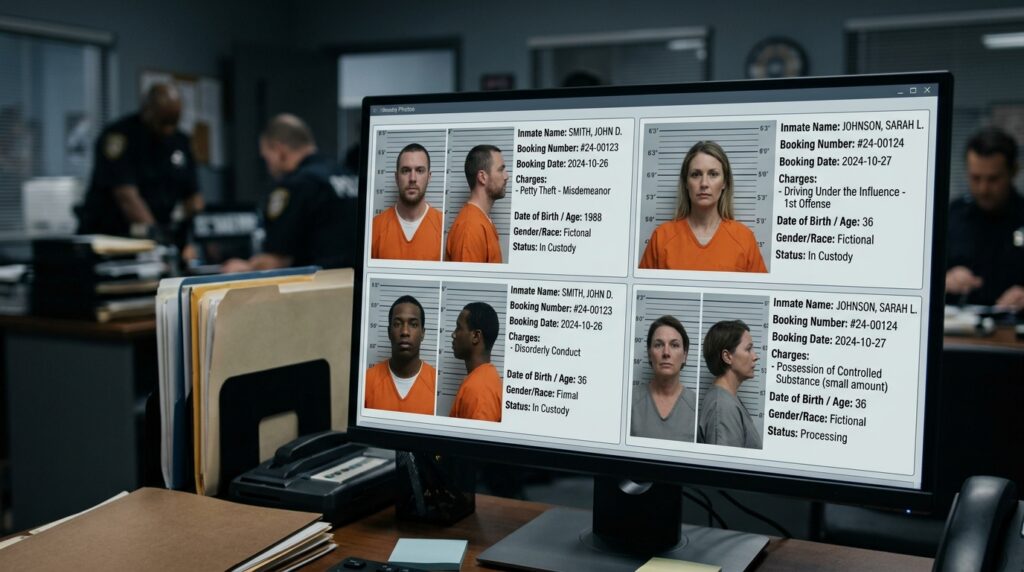
How the County Jail System Works
The county jail system follows a structured process that begins after an arrest and continues until an inmate is released, transferred, or sentenced. Local law enforcement agencies use this system to manage inmates safely and maintain order inside the detention facility. Every stage in the process connects through digital records, custody procedures, and security checks. Most county jails use modern jail management software to monitor inmate movement, housing assignments, and court schedules. This organized structure helps jail staff handle daily operations more efficiently.
Arrest and Transportation to Jail
The custody process starts when a police officer or sheriff deputy makes an arrest for an alleged crime or violation. After the arrest, officers transport the person to a county detention center for intake and processing. During transport, officers secure the inmate, collect basic information, and prepare arrest paperwork for jail staff. The inmate remains under law enforcement supervision from the moment of arrest until booking is complete. Most county jails operate twenty-four hours a day to receive inmates at any time.
Booking Process Inside the Jail
The booking stage creates an official inmate record inside the jail administration system. Jail staff collect fingerprints, photographs, personal details, criminal charges, and medical information during intake processing. Most facilities use a digital booking system that connects with local courts and law enforcement databases. This process confirms inmate identity and helps staff monitor custody status throughout the jail stay. Some inmates may qualify for bail release shortly after booking, depending on the charges and court rules.
Common Steps During Booking
- Fingerprinting and mugshot photography
- Medical and mental health screening
- Property inventory and storage
- Criminal background and warrant checks
- Entry into the inmate tracking database
Temporary Holding and Housing Assignment
After booking, inmates move into temporary holding cells or assigned housing units inside the detention center. Jail officials review several factors before deciding where an inmate should stay within the facility. Security classification helps separate violent offenders, medical cases, and inmates needing protective custody. The inmate tracking system records housing locations, inmate transfers, and movement inside the jail. Correctional officers monitor all housing areas to maintain safety and prevent conflicts between inmates.
Factors Used for Housing Placement
| Housing Factor | Purpose |
| Criminal charges | Determines security level |
| Medical conditions | Supports inmate healthcare |
| Behavioral history | Reduces safety risks |
| Gender separation | Maintains facility rules |
| Protective custody requests | Prevents inmate harm |
Daily Jail Operations and Supervision
County jail operations involve many departments working together every day to manage inmate care and facility security. Correctional officers supervise housing units, conduct inspections, and control inmate movement throughout the building. Administrative staff update court records, process visitation requests, and maintain jail documentation within the jail administration system. Most facilities provide meals, medical care, phone services, recreation time, and visitation under strict schedules. Many county jails now use electronic monitoring systems and digital inmate records to improve efficiency and reduce paperwork.
Court Appearances and Inmate Movement
Many inmates leave the jail temporarily for scheduled court appearances during their custody period. Jail officers coordinate transportation and security for each inmate attending hearings or legal proceedings. The custody process includes detailed scheduling to avoid errors in inmate movement and courtroom transfers. Court updates often affect bail decisions, release dates, or transfer orders inside the jail system. After court appearances, inmates either return to the jail, receive release orders, or transfer into another correctional facility.
Release, Bail, or Transfer Process
The final stage of the county jail system happens when an inmate leaves custody through release, transfer, or sentence completion. Jail staff verify legal paperwork, confirm identity records, and return stored property before discharge. Some inmates leave after posting bail, while others complete short jail sentences or receive probation approval from the court. Inmates sentenced for longer periods may transfer into state or federal prison facilities. The inmate tracking database updates custody records immediately after release to maintain accurate jail documentation.
County Jail Inmate Search System
A county jail inmate search helps the public find information about inmates currently held in a local detention facility. Most county jails use an online inmate lookup system that allows users to search inmate records by name, booking number, or custody details. The inmate search process gives families, attorneys, and public users a simple way to check custody information quickly. Many county detention centers update inmate records daily through digital jail databases connected to local law enforcement systems.
How the County Jail Inmate Search System Works
The county jail inmate search system collects data from jail booking records, court updates, and custody reports. When a person enters jail, staff create a digital inmate profile inside the facility database. This record stores personal details, booking information, charges, housing location, and custody status. The system updates regularly as inmates move through court hearings, release procedures, or housing transfers. Most county jails publish limited inmate details for public viewing through secure online portals.
The online inmate database helps users confirm whether someone is currently in custody. Many county sheriff offices manage these search systems directly through their official jail websites. Some counties update records every few hours, while others refresh information once or twice per day. Search tools often connect with arrest records, booking reports, and local court scheduling systems. This process improves record accuracy and helps reduce phone inquiries to jail staff.
Information Often Found in an Inmate Search
- Full inmate name
- Booking date and time
- Criminal charges
- Bond or bail amount
- Housing location
- Mugshot photograph
- Court dates
- Custody status
- Release information
How to Search an Inmate by Name
Most users search inmates by entering a first and last name into the jail search portal. The system scans inmate records and displays matching results from the jail database. Accurate spelling improves search results and reduces duplicate matches. Some systems allow partial name searches if the exact spelling is unknown. Others require complete legal names for better identification.
A successful prisoner search usually works best when users enter:
- Correct spelling of the inmate’s name
- Middle initial if available
- Date of birth
- County location
- Gender information
Large counties may hold hundreds of inmates with similar names. Extra details help narrow the results and improve search accuracy. Some jail websites sort records alphabetically, while others use booking dates or inmate identification numbers.
Example of a Basic Name Search
| Search Field | Example |
| First Name | Michael |
| Last Name | Carter |
| Date of Birth | 05/10/1992 |
| County | Orange County |
Many inmate search systems return multiple records if names match closely. Users should compare booking dates and charges before selecting a result.
Booking Number Lookup Process
A booking number is a unique identification number assigned during jail intake and processing. This number connects directly to the inmate’s jail record and remains one of the fastest ways to locate custody information. A booking lookup usually provides more accurate results than searching by name alone. Most county jail systems place the booking number near arrest details or inmate profile records.
Booking numbers help jail staff organize inmate records inside the custody system. Family members, attorneys, and bail bond agencies often use this number during inmate communication or release procedures. The number may appear on arrest paperwork, court documents, or public booking reports. Many online jail portals include a separate search field for booking identification numbers.
Benefits of Using a Booking Number
- Faster inmate search results
- Fewer duplicate matches
- Better custody accuracy
- Easier court record tracking
- Quick bond verification
Some counties remove booking records after inmate release, which may affect older search results.
Custody Status Information
The custody status check explains the inmate’s current legal and housing condition inside the county jail system. Jail databases update custody status throughout the inmate’s stay based on court decisions, transfers, or release orders. Status information helps users understand whether the inmate remains in jail, moved to another facility, or completed release processing. Many jail websites display short status labels beside inmate records.
Common Custody Status Terms
| Custody Status | Meaning |
| In Custody | Inmate remains in jail |
| Released | Inmate left jail custody |
| Bonded Out | Release after bail payment |
| Transfer Pending | Awaiting movement to another facility |
| Court Hold | Held until court approval |
| Federal Hold | Detained for federal authorities |
Some counties update custody records instantly, yet others may delay updates for several hours. Court activity and inmate transfers often affect how quickly the system changes status information.
Common Inmate Search Problems
Users sometimes experience issues while using a county jail inmate search system. Search problems often happen because inmate records update at different times throughout the day. Newly arrested inmates may not appear immediately after booking. Some jail systems require several hours before records become visible online.
Misspelled names create another common search problem. Even a small spelling error can prevent accurate search results inside the inmate database. Booking systems may list legal names instead of nicknames or shortened versions. Technical issues on county websites can temporarily block public inmate searches during maintenance periods.
Frequent Search Issues
- Incorrect name spelling
- Delayed booking updates
- Wrong county selected
- Missing booking number
- Website maintenance problems
- Recently released inmates removed from records
If the inmate search does not return results, users often contact the county sheriff office directly for custody confirmation. Jail staff may confirm whether the inmate remains in custody or recently transferred to another detention facility.
County Jail Roster & Records
A county jail roster is a public list that displays inmates currently held inside a local detention facility. Most county jails publish these records through an online jail records search system that updates booking and custody information regularly. The jail roster helps families, attorneys, and public users check inmate status without contacting the jail directly. Many counties connect their roster systems with digital booking databases, arrest reports, and inmate management software for faster record updates.
What Is a County Jail Roster?
A county jail roster is a searchable inmate list managed by the sheriff’s office or county corrections department. The roster displays basic inmate details collected during the booking process and stores them inside the jail database. Most facilities organize records alphabetically or by booking date for easier searches. Some counties provide daily booking logs, while others show only active inmates currently in custody. The online roster works as part of the local arrest records database and inmate tracking network.
Many jail websites allow users to search by:
- Inmate name
- Booking number
- Arrest date
- Criminal charges
- Housing location
The roster gives the public a quick way to verify whether someone remains in jail custody. Counties may limit certain details based on privacy rules or legal restrictions.
How Often County Jail Rosters Are Updated
Most county jail rosters update several times each day through automated inmate management systems. Some large counties refresh records every few minutes, especially after bookings, court hearings, or inmate releases. Smaller detention centers may update records only once or twice daily depending on staffing and software systems. The update schedule affects how quickly new arrests appear inside the public jail database. Delays sometimes happen during system maintenance, high booking activity, or court processing periods.
The booking list changes often since inmates enter and leave custody throughout the day. Court orders, bond payments, and transfers can quickly change inmate status inside the jail system. Many sheriff offices place a notice on their websites explaining that records may not reflect real-time custody conditions. Users should verify important information directly with jail staff if search results appear outdated. Accurate updates help reduce confusion for families, attorneys, and bail agencies.
How Jail Records Are Structured
County jail records follow a structured format that organizes inmate details inside the inmate database. Each inmate receives a unique booking profile during intake processing. The system stores identification details, criminal charges, custody information, and booking history within one digital file. Most jail databases use searchable fields to improve record management and public lookup speed. Structured records help correctional staff track inmate movement and legal status more efficiently.
Common Information Found in Jail Records
| Record Field | Purpose |
| Full Name | Identifies the inmate |
| Booking Number | Tracks inmate record |
| Arrest Date | Shows custody timeline |
| Criminal Charges | Lists alleged offenses |
| Bond Amount | Displays bail information |
| Housing Unit | Shows jail location |
| Mugshot Photo | Visual inmate identification |
| Court Date | Tracks legal hearings |
What Users Can Find in a Jail Records Search
A public jail records search allows users to review inmate custody details, booking information, and arrest records online. Families often use these systems to confirm inmate housing location and visitation eligibility. Attorneys review booking details and custody updates before court hearings. Bail bond agencies use jail records to verify bond amounts and inmate release status. Many county websites include downloadable booking reports or searchable inmate logs for public viewing.
Information Commonly Available to Users
- Current custody status
- Booking and release dates
- Arrest charges
- Mugshot photographs
- Court scheduling details
- Bond or bail information
- Jail housing assignments
The mugshot system connects inmate photographs with booking records to improve inmate identification accuracy. Some counties allow public mugshot viewing online, while others restrict image access based on local laws. Public jail records help improve transparency inside the county correctional system and support communication between law enforcement agencies and the public.
Bail & Release Information
County jail bail information explains how inmates may leave custody before trial by paying money or meeting court-approved release terms. The jail release process follows legal procedures that confirm eligibility, verify payments, and review court conditions before an inmate leaves custody. Most county jails process releases every day through a structured custody system connected to courts, law enforcement agencies, and inmate databases. Release time often depends on the type of charges, court approval, jail workload, and bond processing speed.
How Bail Works in County Jail
Bail is a financial agreement that allows an inmate to leave jail while waiting for future court hearings. The court sets a bail amount based on criminal charges, public safety concerns, and the inmate’s criminal history. When bail is paid, the inmate promises to return for all scheduled court appearances. If the inmate misses court, the court may issue a warrant and keep the bail money. The county jail updates the inmate’s custody record once the payment process is complete.
Judges review several factors before setting bail amounts:
- Severity of the charges
- Prior arrest history
- Flight risk concerns
- Public safety risks
- Probation or parole status
Some inmates receive release without paying bail if the court believes they are low-risk offenders. Other inmates may remain in custody until a bail hearing takes place.
Types of Bonds Used in the Jail System
The bond system includes several release options depending on local laws and court decisions. Different bond types affect how inmates leave custody and what financial responsibility applies during release. Courts decide the bond category during arraignment or initial hearings. Jail staff cannot usually change bond amounts without court approval. Each bond type carries different legal conditions for the inmate.
Common Bond Types
| Bond Type | Description |
| Cash Bond | Full bail amount paid in cash |
| Surety Bond | Bail bond company pays the court |
| Property Bond | Property used as collateral |
| Personal Recognizance Bond | Release based on promise to appear |
| Federal Bond | Bond issued for federal charges |
A surety bond often involves a licensed bail bond agent who charges a non-refundable fee. Personal recognizance release usually applies to lower-level offenses or first-time offenders.
Bail Hearings and Court Decisions
A bail hearing gives the judge an opportunity to review the inmate’s case and decide release eligibility. These hearings often happen within the first few days after arrest, depending on local court schedules. Prosecutors may request higher bail amounts if they believe the inmate presents a safety or flight risk. Defense attorneys may ask for lower bail or supervised release conditions. The judge then decides whether the inmate qualifies for release, reduced bond, or continued detention.
During the hearing, the court may review:
- Criminal history
- Employment background
- Community ties
- Prior court appearance record
- Current charges
County Jail Release Timeline
The jail release process may take several hours after bail payment or court approval. Jail staff must verify legal paperwork, confirm payment records, and complete inmate discharge procedures before release. Large county jails often process releases slower due to high inmate populations and security checks. Weekends, holidays, and overnight hours may increase processing delays. Some inmates leave custody the same day, while others wait longer for final approval.
Steps in the Release Process
- Court approves release or bond
- Bail payment is verified
- Jail staff review custody records
- Property return process begins
- Final discharge paperwork is completed
- Inmate exits the detention facility
Conditions for Release From County Jail
Many inmates leave custody with court-ordered release conditions that remain active until the case ends. These conditions help courts monitor defendants and protect public safety after release. Violating release terms may lead to re-arrest, bond cancellation, or stricter supervision orders. Courts often apply conditions based on the seriousness of the charges and prior criminal history. Some release programs include regular reporting or electronic monitoring.
Common Release Conditions
- Mandatory court appearances
- Travel restrictions
- No-contact orders
- Drug or alcohol testing
- Electronic monitoring
- Curfew requirements
The court may place inmates under supervised release programs instead of full detention. These programs allow limited freedom while the criminal case continues through the legal system.
County Jail Booking Process
The county jail booking process begins after law enforcement officers bring an arrested person into a detention facility for intake and processing. Jail staff collect personal information, create inmate records, and complete security procedures before placing the inmate into custody. The booking process helps the jail confirm identity, document criminal charges, and maintain facility safety. Most county jails follow a standard intake procedure that includes fingerprinting, mugshots, medical screening, and arrest record verification.
Arrest Intake at the Jail Facility
The booking process starts when officers transfer custody of the arrested person to county jail staff. Officers submit arrest reports, criminal charges, and related paperwork during the intake stage. Jail employees review this information before beginning inmate processing procedures. The intake area remains highly secure since newly arrested inmates first enter the detention facility there. Many county jails operate intake departments twenty-four hours a day to handle continuous arrests.
During arrest intake, staff usually collect:
- Full legal name
- Date of birth
- Address information
- Emergency contacts
- Criminal charges
- Personal belongings
Fingerprinting and Identity Verification
Fingerprinting is one of the most important parts of the intake process inside the county jail system. Jail staff scan or record fingerprints to confirm the inmate’s identity and check criminal history databases. These fingerprint records connect with local, state, and federal law enforcement systems. Identity verification helps officers locate outstanding warrants, prior arrests, or probation violations. Accurate fingerprint records improve inmate tracking throughout the detention process.
Most modern jails use electronic fingerprint scanners instead of traditional ink methods. Digital systems process records faster and reduce identification errors. Fingerprints remain part of the inmate’s permanent criminal justice record after booking. This information supports court proceedings, custody management, and law enforcement investigations.
Mugshots and Arrest Documentation
After fingerprinting, jail staff take official inmate photographs known as mugshots. These photographs become part of the inmate’s booking profile and arrest documentation. Mugshots help jail staff confirm inmate identity during housing assignments, visitation checks, and court transportation. Many county jail systems store mugshots inside searchable inmate databases linked to booking records. Some counties make mugshot records available through public jail roster systems.
Information Added to Arrest Records
| Booking Record Item | Purpose |
| Mugshot Photograph | Visual identification |
| Criminal Charges | Legal offense record |
| Arrest Date & Time | Custody timeline |
| Booking Number | Unique inmate ID |
| Arresting Agency | Law enforcement record |
Medical Screening and Safety Checks
County jails perform medical screening during booking to identify health concerns or safety risks. Nurses or medical staff ask questions about injuries, medications, mental health conditions, and substance use history. These screenings help the jail provide proper medical care and reduce health risks inside the facility. Inmates showing signs of illness, intoxication, or medical emergencies may receive immediate treatment before housing placement. Safety checks protect both inmates and jail employees during detention.
Jail staff may review:
- Prescription medication needs
- Mental health concerns
- Suicide risk indicators
- Drug or alcohol withdrawal symptoms
- Existing injuries
Housing Assignment and Final Processing
The final stage of the detention process places inmates into holding cells or assigned housing units inside the jail. Staff review criminal charges, behavior concerns, and security classifications before making housing decisions. Some inmates stay in temporary holding areas while waiting for court hearings or bail approval. Others move directly into general population housing after booking finishes. The inmate tracking system updates custody status immediately after placement inside the facility. Correctional officers monitor inmate movement throughout the jail after intake processing ends. Every booking step supports jail security, inmate accountability, and proper custody management within the county correctional system.
Visitation & Communication Rules
County jail visitation rules set the structure for how inmates meet family members and communicate with people outside the detention facility. These rules help maintain security inside the jail while allowing controlled contact through approved visiting hours and communication systems. Most county jails use strict policies for visits, phone calls, and mail. The inmate communication system is monitored to prevent misuse, protect safety, and maintain order inside the facility.
Visitation Rules Inside County Jail
Visitation in a county jail follows scheduled time slots approved by jail administration. Visiting hours may vary based on housing units, inmate classification, and facility size. Visitors must follow identification checks and security screening before entering the visitation area. Many jails require advance scheduling through online systems or phone registration.
Common visitation requirements include:
- Valid government-issued ID
- Approved visitor list clearance
- Dress code compliance
- Arrival before scheduled time
- Security screening checks
Some inmates may have limited or restricted visits based on behavior, charges, or disciplinary actions. Contact visits may be replaced with non-contact video visits in high-security units. Juvenile visitors often require adult supervision and additional approval from jail authorities.
Inmate Phone Communication System
The jail phone system allows inmates to make outgoing calls to approved contacts. Calls are usually monitored or recorded for security reasons. Inmates cannot receive incoming calls inside most county jails. Phone access depends on housing schedules, security level, and facility policies.
Phone System Rules
- Outgoing calls only
- Call monitoring and recording
- Time limits per call
- Approved contact lists required
- Prepaid or collect call options
Many jails use third-party communication services that manage inmate calling accounts. Family members often need to create prepaid accounts to receive calls from inmates. Phone access may be limited during lockdowns, court transfers, or disciplinary restrictions.
Mail and Written Communication Rules
Mail remains one of the most common communication methods inside county detention facilities. Inmates can send and receive letters, but all mail is inspected by jail staff before delivery. Security screening checks for prohibited items, coded messages, or contraband materials.
Approved mail items usually include:
- Letters and handwritten notes
- Legal documents
- Photographs (size and quantity limits apply)
- Approved printed materials
Some jails restrict envelopes, paper types, or ink colors. Packages from outside sources are often not allowed unless approved by jail administration. Legal mail from attorneys is typically handled with additional privacy protections.
Communication Restrictions and Jail Policies
County jail communication policies focus on safety, security, and controlled interaction between inmates and the public. Restrictions may apply based on inmate behavior, court orders, or security classification. Violations of communication rules can result in loss of privileges or disciplinary action.
Common restrictions include:
- No contact with certain individuals
- Limited phone access during lockdowns
- Suspended visitation rights for rule violations
- Monitoring of all non-legal communication
- Restricted media or publication access
These rules help maintain order inside the facility while allowing regulated contact between inmates and approved visitors. The communication system remains closely linked with jail administration and security operations throughout the inmate’s custody period.
Legal Rights & Public Records Access
Arrest records access allows the public to view basic information about individuals held in county jail facilities through official databases. This system works under public records laws that require certain criminal justice data to remain open and available for transparency purposes. County jails publish selected inmate details, booking data, and custody updates through online platforms and sheriff office portals. These systems support accountability between law enforcement agencies and the public.
Most counties maintain a structured public records search system that includes arrest logs, jail rosters, and inmate lookup tools. These records help users confirm custody status, review booking details, and track case-related information. However, access levels vary based on state law, privacy rules, and active investigation protections.
Public Records Laws and Access Rules
Public records laws define what information can be shared with the public and what must remain confidential. County jail systems follow these rules when publishing inmate data online. Arrest records, booking details, and custody status often remain public, while sensitive medical or investigative information stays restricted. Some jurisdictions may delay publishing records for ongoing cases or juvenile matters.
Common publicly available records include:
- Arrest dates and booking details
- Criminal charges filed at intake
- Bond or bail amounts
- Custody status updates
- Mugshot photographs (in many counties)
Inmate Legal Rights During Custody
Inmates inside county jails maintain legal rights even while in custody. These rights protect fair treatment and access to legal support during detention. Jail staff must follow constitutional protections while managing inmate safety and facility rules. Legal rights apply to both pre-trial detainees and sentenced inmates held in county facilities.
Key Inmate Rights
- Right to legal representation
- Right to contact an attorney
- Right to safe living conditions
- Right to medical care
- Right to court hearings
- Right to protection from abuse
Data Transparency in County Jail Systems
Modern county jail systems use data transparency practices to improve public trust and accountability. Online inmate databases, arrest logs, and booking systems allow real-time or near real-time updates about custody status. These systems reduce the need for manual record requests and improve communication between law enforcement agencies and the public.
Transparency systems help:
- Families confirm inmate custody
- Attorneys track case progress
- Bail agencies verify booking status
- Public monitor local arrest activity
Many sheriff offices now use digital dashboards and automated jail records search tools to keep information updated. This approach strengthens trust in the criminal justice process while maintaining necessary security controls inside detention facilities.
State-by-State Jail Records Access
Each U.S. state operates its own correctional system, and jail records are managed through a mix of state departments and county sheriff offices. These systems maintain inmate databases, booking records, and custody status updates for public reference. Access methods differ from state to state, depending on local laws and record policies. Some states offer centralized online search tools, while others rely on individual county portals for inmate lookup. This structure helps users locate arrest and jail information across different regions more efficiently.
Alabama Jail Records & Inmate Information
The Alabama correctional system includes both state-run prisons and county jail facilities managed by local sheriffs. State-level custody is handled by the Alabama Department of Corrections, while short-term detention and booking occur at county jails. This division creates a two-level structure for inmate records and search systems. Users often need to check both state and county databases to confirm custody status.
Alabama Department of Corrections (ADOC)
Address: 301 South Ripley Street, P.O. Box 301501, Montgomery, AL 36130-1501
Phone: (334) 242-8700
Website: https://doc.alabama.gov
Jefferson County Jail (Birmingham)
Main Phone: (205) 325-5670
Visitation: (205) 325-5672
Inmate Accounts: (205) 325-5454
Medical Services: (205) 325-5673
Property Desk: (205) 325-5671
Address: 809 Richard Arrington Jr Blvd N, Birmingham, AL 35203
Mobile County Metro Jail
Main Phone: (251) 574-6412
Visitation: (251) 574-3388
Inmate Accounts: (251) 574-3388
Medical Services: (251) 574-4800
Address: 450 St Anthony St, Mobile, AL 36603
Madison County Jail
Main Phone: (256) 532-3412
Visitation: (256) 532-3700
Inmate Accounts: (256) 519-4800
Medical Services: (256) 532-0326
Address: 815 Wheeler Ave NW, Huntsville, AL 35801
Alaska Jail Records & Inmate Information
Alaska operates a statewide correctional system managed by the Alaska Department of Corrections. This system handles inmate supervision, prison management, and record maintenance. Local facilities manage intake, booking, and temporary detention before transfer to larger correctional centers. Due to the state’s geography, facilities are spread across multiple regions.
Alaska Department of Corrections
Main Phone: (907) 465-4652
Visitation: (907) 269-7350
Inmate Accounts: (907) 269-7352
Medical Services: (907) 269-7400
Website: https://doc.alaska.gov
Anchorage Correctional Complex
Phone: (907) 269-4100
Address: 1300 E 19th Ave, Anchorage, AK 99501
Fairbanks Correctional Center
Phone: (907) 458-6700
Address: 1931 Eagan Ave, Fairbanks, AK 99701
Lemon Creek Correctional Center
Phone: (907) 465-6200
Address: 2000 Lemon Creek Rd, Juneau, AK 99801
Arizona Jail Records & Inmate Information
Arizona jail records are managed at both state and county levels. The Arizona Department of Corrections handles long-term incarceration, while county sheriff offices manage inmate booking and short-term detention. Each county maintains its own inmate search system, which may include booking details, charges, and custody updates. This makes cross-checking multiple databases common for accurate results.
Arizona Department of Corrections (ADCRR)
Phone: (602) 542-5497
Website: https://corrections.az.gov
Address: 1601 W Jefferson St, Phoenix, AZ 85007
Pima County Jail
Main Phone: (520) 351-8111
Visitation: (520) 351-8111
Address: 1270 W Silverlake Rd, Tucson, AZ 85713
Pinal County Jail
Main Phone: (520) 866-5111
Visitation: (520) 866-5047
Address: 971 Jason Lopez Cir, Florence, AZ 85132
Yavapai County Jail
Main Phone: (928) 771-3260
Visitation: (928) 771-3286
Address: 255 E Gurley St, Prescott, AZ 86301
Arkansas Jail Records & Inmate Information
Arkansas maintains a mixed correctional structure with state prisons and county detention centers. The Arkansas Department of Corrections manages long-term inmates, while county jails handle arrests and short custody stays. Each county maintains separate booking and arrest record systems. Users often rely on sheriff office databases for inmate search and jail roster updates.
Arkansas Department of Corrections (ADC)
Phone: (870) 267-6999
Website: https://doc.arkansas.gov
Address: 6814 Princeton Pike, Pine Bluff, AR 71602
Pulaski County Jail
Main Phone: (501) 340-7001
Visitation: (501) 340-5750
Address: 3201 W Roosevelt Rd, Little Rock, AR 72204
Faulkner County Jail
Main Phone: (501) 450-4914
Visitation: (501) 450-4917
Address: 801 Locust St, Conway, AR 72034
Benton County Jail
Main Phone: (479) 271-1000
Visitation: (479) 271-1091
Address: 1300 SW 14th St, Bentonville, AR 72712
California Jail Records & Inmate Information
California operates one of the largest jail systems in the United States, with a clear separation between state prisons and county jails. The California Department of Corrections and Rehabilitation manages state inmates, while county sheriff departments oversee local detention facilities. Inmate search systems vary widely across counties, making localized searches important for accurate information.
California Department of Corrections and Rehabilitation (CDCR)
Phone: (916) 324-7308
Website: https://www.cdcr.ca.gov
Address: 1515 S St, Sacramento, CA 95811
Los Angeles County Jail System
Main Phone: (213) 473-6100
Visitation: (213) 473-6100
Address: 450 Bauchet St, Los Angeles, CA 90012
San Diego County Jail
Main Phone: (619) 610-1647
Visitation: (619) 610-1647
Address: 9621 Ridgehaven Ct, San Diego, CA 92123
Orange County Jail
Main Phone: (714) 647-4666
Visitation: (714) 647-4666
Address: 550 N Flower St, Santa Ana, CA 92703
Colorado Jail Records & Inmate Information
Colorado jail systems operate through county sheriff departments and the Colorado Department of Corrections. State facilities manage long-term incarceration, while county jails handle arrest processing and short-term custody. Many counties offer online inmate lookup tools for public record searches. These systems provide booking details, custody status, and court-related updates.
Colorado Department of Corrections (CDOC)
Phone: (719) 226-4880
Website: https://cdoc.colorado.gov
Address: 1250 Academy Park Loop, Denver, CO 80239
Denver County Jail
Main Phone: (720) 913-3600
Visitation: (720) 913-3646
Address: 10500 Smith Rd, Denver, CO 80239
El Paso County Jail
Main Phone: (719) 390-2000
Visitation: (719) 520-7605
Address: 2739 E Las Vegas St, Colorado Springs, CO 80906
Arapahoe County Jail
Main Phone: (303) 795-4960
Visitation: (303) 795-4590
Address: 7375 S Potomac St, Centennial, CO 80112
Frequently Asked Questions
This section addresses common long-tail queries related to county jail inmate search, custody duration, bail decisions, and public records access. Each answer reflects how county jail systems operate in real situations and how information is usually shared through official channels.
How to find someone in county jail?
A county jail inmate search system is typically used to locate someone who may be in custody. Most sheriff offices provide an online inmate lookup tool where a name or booking number can be entered. The system then matches results from the jail database and displays active custody records. If no record appears, the person may be in a different county, recently released, or not yet processed into the booking system. Some delays can occur during intake or system updates.
How long do people stay in county jail?
Time spent in county jail varies based on legal status and case progress. Some individuals remain only a short period after arrest, sometimes just hours or a few days. Others stay longer if they are awaiting trial or sentencing decisions. Pre-trial detainees often remain in custody until court proceedings are completed, while sentenced inmates usually serve shorter terms under one year. Longer sentences typically lead to transfer into a state prison system.
How is bail set in county jail cases?
Bail is set by a judge after reviewing case details, criminal charges, and risk factors related to release. A bail hearing may be scheduled to evaluate whether the amount should be adjusted or if release should be granted under conditions. Judges consider public safety, prior criminal history, and the likelihood of the person returning to court. In some cases, bail may be denied entirely depending on the seriousness of the offense or legal restrictions.
Are jail records public?
Most public jail records are available under state public records laws, which support transparency in the criminal justice system. These records often include arrest details, booking information, custody status, and sometimes mugshots. However, not all information is publicly visible, especially in cases involving juveniles, sealed records, or active investigations. Each county decides how much data is shared through its official arrest records database or inmate search system.
What information shows in an inmate search?
An inmate search system typically shows basic custody details from the jail database. This may include the inmate’s name, booking number, charges, arrest date, and current custody status. Some systems also display court dates and bond amounts. Information varies depending on the county and how frequently the database is updated.